
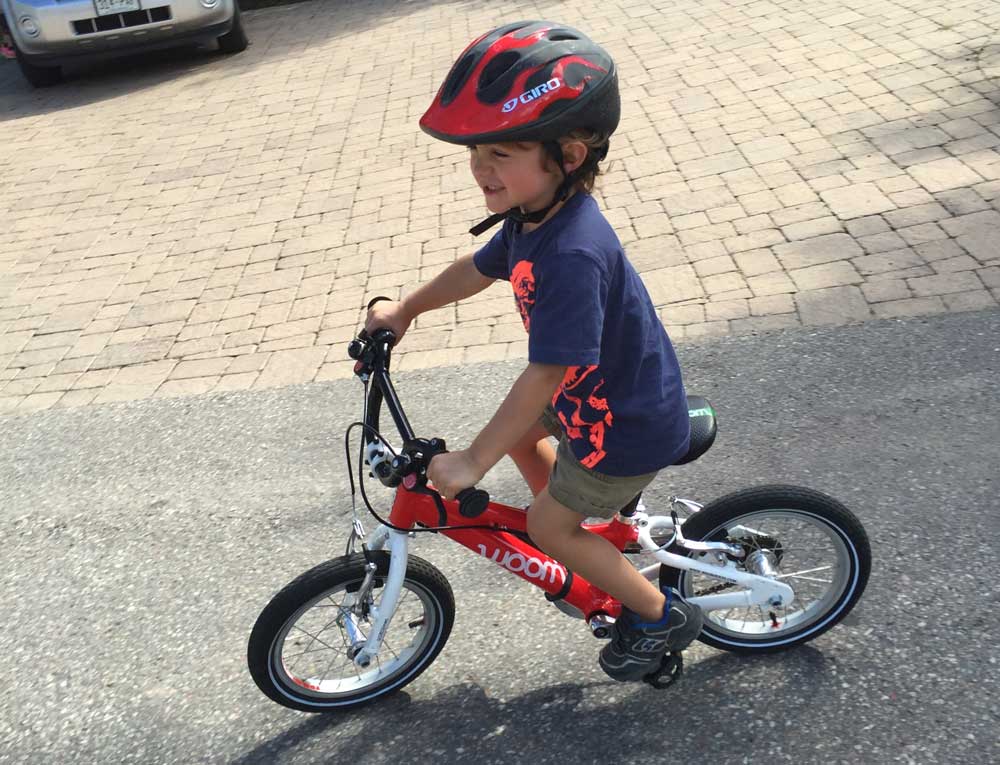
Okay, let me just say this upfront: I’ve probably purchased more than ten kids’ bikes over the years between my two boys, plus half the neighborhood has come to me asking “wait, which bike did you get again?” So here’s everything I’ve learned, from a decade of birthday-morning bike reveals, skinned knees, and way too much time on bike forums at 11pm.
What actually matters when picking a first pedal bike
Weight is everything — more than people realize. A lot of “beginner” bikes sold at big box stores weigh 18-22 pounds, which for a 35-pound three-year-old is like you or me trying to pedal around a bike made of cinderblocks. If you live in a hilly area, this matters even more. Imagine pedaling a 100 lb bike up a large hill. Weight-to-child-ratio matters more than almost anything else on this list.
Minimum Seat Height. When kids are first learning to pedal, they start pedalling with their butt on the bike’s seat. It takes way too much coordination and balance for a child to stand over the frame, and start pedaling while balancing and moving their body back on to the seat. This means, it’s important for a child to be able to sit on the seat with solid toes on the ground. For a more anxious rider, I would recommend being able to sit on the seat while flat footed. Being able to touch a foot down easily while sitting will go a long way in boosting confidence while learning. Measure their inseam and compare that to the minimum height of the seat (the lowest the seat will go).
Standover height. The standover height is how high the top tube across the frame is. When your kid straddles it flat-footed, you want your child to be able to plant both feet firmly on the ground with a little room to spare. This is more important than exact age recommendations — every kid’s inseam is different.
Coaster brake vs. hand brake. This one’s a real debate in the bike-parent world. Personally, I am a big fan of hand brakes and do not like coaster brakes (pedal backward to stop). When my 2nd son tried to learn briefly on a Specialized pedal bike with a coaster brake, he kept accidentally pedaling backwards and thus slamming on the brakes, which scared him. He quickly changed from a confident Strider rider to a timid cyclist, not what any parent wants to see. As soon as we switched him to a Woom with only handbrakes, he was off and riding. Plus, your child will eventually have to learn how to use a hand brake anyways so why add another potentially scary transition later on.
Low, forgiving gearing. A single-speed with a low gear ratio makes it much easier for small, weak legs to get the bike moving from a dead stop, especially on any incline. This is one of those specs nobody thinks to check and it makes a huge difference in how fast a kid gains confidence. That being said, for an aggressive rider, looking at an automatic 2-speed shifting bike can help prevent them from “spinning out” when pedaling fast.
Real pneumatic tires over hard plastic/solid tires. Air-filled tires absorb bumps and give better grip, which means fewer scary wobbles and falls on cracked sidewalks. Plastic/solid tires on a pedal bike should be an instant deal breaker.
Quality control on the small stuff. Grips that don’t slip, a seat post with a quick-release clamp (so you’re not hunting for an Allen key every time they hit a growth spurt), and a chain guard so pant legs don’t get eaten.
One more thing! Bike gloves. Another thing I always recommend that most parents don’t consider when your child is first learning to pedal – along with always wearing a helmet, have your child wear bike gloves. Inevitably, your child will fall and have to put their hand on the pavement to catch themselves. The gloves prevent most painful cuts and scrapes. My goal as a parent was to make learning to ride as pain free and fun as possible! Such a small purchase (typically less than $20) goes a long way in achieving this goal! Plus many are made with fun prints and colors that kids love!